

Uncategorized

IPUN Ultrasound Courses
This page informs about the activities of the GTP in the field of paediatric ultrasound diagnostics. This page is under development and will receive more comprehensive information as it progresses. Please feel free to visit us regularly.
Registration for ultrasound courses:
The course list in the grey box provides information about places still available on the individual courses.
Registration is binding and must be made using the online form below. After receipt of your registration, you will first receive an automated confirmation of receipt with further important information and then a final confirmation of your place from the organisation team, along with a payment request.
GTP ultrasound courses – timeline
Since 2017, we have been offering ultrasound courses internationally. These courses provide you with the opportunity to explore typical findings alongside experienced course leaders in various regions and also allows you to discover parts of the respective country during your free time. The courses are mainly aimed at young residents who learn together with the residents of the specialist programme and young local specialists with little or no prior experience in sonography.
In 2021, the GTP received a 5-year funding from EKFS to professionalize and integrate course structures locally, as well as to establish the “EKFS GPT International Paediatric Ultrasound Network”.
Basic course
Sonography of the skull, thorax and abdomen for basic diagnosis of pathologies and performance of interventions such as pleural puncture.
Echocardiography
Cardiac sonography focusing on mastering key sectional views and recognizing common pathologies.
General course information
- Course language: English
- Participants: 15-20 local medical personal, some courses are open for non-local participants
- Course fees: Single 4-day-course 400 euros, single 5-day-course 500 euros, two combined courses 700-900 euros, combination of three courses 1000-1300 euros
- Not included in the course fee: travel expenses, accommodation, visas, travel insurance, vaccinations and malaria prophylaxis and other travel arrangements. We kindly ask you to organize these independently, but we are happy to provide recommendations and assistance.
- Cancellation policy: in case of cancellation 4-8 weeks before the start of the course, we retain 50% of the course fees; in case of cancellation 4 weeks or less before the start of the course, we retain 90% of the course fees. This is necessary to cover cancellation costs.
- General inquiries (not application): please email at ipun-info(a)globalchildhealth.de
Next courses
Places for non-lokal participants: 2-3 participants
Places for non-lokal participants: 2-3 participants
Places for non-lokal participants: 4 participants
Places for non-local participants: 1-2 participants
Places for non-local participants: 1-2 participants
Placements for non-local participants: 1-2 available
Places for non-lokal participants: available (1-2 places)
Places for non-lokal participants: available (1-2 places)
Places for non-lokal participants: available (1-2 places)
Places for non-lokal participants: available (1-2 places)
Registration
We are very much looking forward to your participation! Please take a moment to read the cancellation policy and fill out the form below completely.
Your registration is binding and you will receive an automated confirmation of receipt.
A final confirmation with request for payment will be made by the organisation team after checking the local course capacities. Please do not book flights etc. until you have received final confirmation.
Cancellation policy:
If you cancel your participation, we will apply a 50% charge of the course fee for cancellations made between 4-8 weeks before the course, and a 90% charge for cancellations made 4 weeks or less before the course begins.
Registration form


Doctor for tropical medicine (m/f/d) at the University of Tübingen
The Institute of Tropical Medicine, Travel Medicine and Human Parasitology at the University of Tübingen is looking for:
a (Specialist) doctor (f/m/d) in full-time
.
The position is initially limited until 30.11.2024, with an option for extension.
Application deadline: 11.12.2022
The doctor shall support the medical team of the outpatient department at the Institute of Tropical Medicine in the medical activities in outpatient care and preventive travel medicine as well as in conducting clinical studies. At the Institute, there is the possibility of further training for the additional title of tropical medicine and infectiology (according to DGI). In addition, academically interested persons have the possibility of habilitation.
Job advertisement in original and contact person here .

Medical Program Coordinator (MD) - Sierra Leone
 German Doctors e. V. is looking for a Medical Program Coordinator for the Bsc Paediatric Training Program (PTP) together with the Ministry of Health and Sanitation (MoHS) and Makeni School of Clinical Sciences (MSCS) in Sierra Leone.
Duration: 1.5 years with renewal option as full-time position
Application: closing date is 31st May 2023
For further information refer to the German Doctors’ job advertisement here.
Pressemitteilung zur Weltimpfwoche (24.-31.4.23)
Dramatischer Rückgang der Kinderimpfquoten weltweit
Die deutsche Gesellschaft für Tropenpädiatrie und Internationale Kindergesundheit e.V. (GTP)* beobachtet seit Beginn der COVID-19-Pandemie mit großer Sorge, dass in den Jahren 2020 und 2021 weltweit 23 bzw. 25 Millionen Kinder nicht gegen die im WHO-Impfplan aufgeführten Infektionskrankheiten (Tuberkulose, Tetanus, Diphtherie, Pertussis, Poliomyelitis, Haemophilus influenzae Typ b, Hepatitis B, Pneumokokken, Rotaviren, Masern, Röteln, Humanes Papillomavirus) geimpft worden sind. Seit 2019 haben damit laut dem aktuellen UNICEF-Jahresbericht 67 Millionen Kinder keinen umfassenden Impfschutz erhalten.1 Die Errungenschaften von 15 Jahren weltweiter Impfkampagnen sind innerhalb von zwei Jahren verloren gegangen, die Impfquoten liegen nur noch bei 81% und damit auf dem Niveau von 2008. Besonders Asien und Teile Afrikas sind von dem Rückgang stark betroffen.
Dieser Rückschritt bei den Impfraten gefährdet die Gesundheit der Kinder und ihrer Familien nachhaltig. Schon jetzt ist weltweit ein deutlicher Anstieg bei den Masernerkrankungen und Poliomyelitisfällen zu beobachten. Eine Elimination bzw. Eradikation dieser beiden gefährlichen Virusinfektionen rückt damit in weite Ferne. Zudem zeigen wissenschaftliche Daten der vergangenen Jahre, dass es sehr schwierig ist, diejenigen Kinder zu erreichen, die bisher nicht geimpft worden sind, und somit die Impflücken zu schließen. Die WHO, UNICEF und weitere Partner haben eine weltweite Kampagne mit dem Titel „The Big Catch-Up“ gestartet, um der jetzigen besorgniserregenden Entwicklung entgegenzuwirken.2
Die GTP appelliert daher eindringlich an die Bundesregierung sowie die Ministerien für Gesundheit (BMG), Finanzen (BMF) und Wirtschaftliche Zusammenarbeit und Entwicklung (BMZ), sich international intensiv zu engagieren, indem unser Land sowohl finanziell als auch logistisch alle Programme langfristig unterstützt, die es ermöglichen, dass jedes einzelne Kind auf diesem Globus alle erforderlichen Impfungen erhält und dass größte Anstrengungen unternommen werden, auch die Kinder zu erreichen, die bisher nicht von den Impfprogrammen profitiert haben. Die GTP unterstützt ebenso den Appell der International Pediatric Association (IPA)3 und aller ihrer Mitgliedsverbände, vernehmbar und energisch für das Wohl aller Kinder zu kämpfen, denn nur gemeinsam können wir das Ziel hoher Impfraten erreichen.
Siehe auch: Newsrubrik im Deutschen Ärzteblatt
Informationen zur GTP:
Die Gesellschaft für Tropenpädiatrie und Internationale Kindergesundheit e.V. ist die einzige wissenschaftliche Fachgesellschaft in Deutschland, die sich im Verbund mit internationalen Partnern seit über 20 Jahren dafür einsetzt, die gesundheitliche Situation aller Kinder von Geburt bis zum Erreichen des Erwachsenenalters nachhaltig zu verbessern und damit den Kindern und ihren Familien eine Zukunftsperspektive zu ermöglichen. Aktivitäten der GTP in Deutschland umfassen einen jährlichen Kongress mit internationaler Beteiligung, Intensivkurse zu Fragestellungen der globalen Kindergesundheit sowie die Mitgliedschaft und aktive Mitarbeit in verschiedenen wissenschaftlichen und gesundheitspolitischen Gremien. Ferner engagiert sich die GTP seit vielen Jahren in Projekten in Asien (Nepal) und Afrika südlich der Sahara (Tansania, Malawi, Burundi), die die Weiterbildung von ärztlichen und anderen Fachkräften und die Qualitätsverbesserung in der Gesundheitsversorgung von Kindern zum Ziel haben. Diese Projekte orientieren sich an den Zielsetzungen der jeweiligen Länder und werden mit siebenstelligen Beträgen vom BMZ und privaten Stiftungen gefördert.
Kontaktdaten:
Gesellschaft für Tropenpädiatrie und Internationale Kindergesundheit e.V. (GTP)
Dr. med. Sarah Kotsias-Konopelska, Vorsitzende
Dr. med. Christian Schmidt, Vorsitzender
PD Dr. med. habil. Carsten Krüger, Ehrenvorsitzender
Geschäftsstelle am Standort St. Vinzenz-Hospital
Andrea Jütte Dr.-Otto-Seidel-Straße 31-33
46535 Dinslaken
Telefon: 0177 401 48 05 (Mo-Fr 18-20 Uhr)
Email: info@globalchildhealth.de
www.globalchildhealth.de
Quellen:
1 UNICEF: The State of the World’s Children 2023: For Every Child, Vaccination. https://www.unicef.org/pressreleases/sowc_2023_immunization
2 https://www.who.int/campaigns/world-immunization-week/2023
3 IPA: https://ipa-world.org/
GTP2023 - Workshops, Fireside Talks and World Café Details
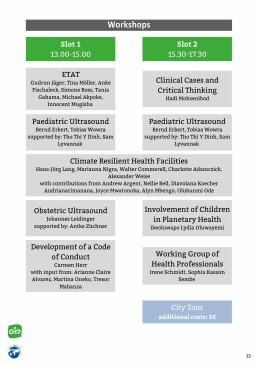
Workshops
Introduction to ETAT: a practical and proven concept for emergency care of children
If you are planning to work abroad, get prepared! With this workshop, we are offering an insight into the ETAT concept for the treatment of critically ill children, which has shown to improve a lot the preparation for taking care for children in a LMIC. The Workshop with an introduction and practical examples will be conducted by experienced ETAT instructors from Europe and LIC.
Number of Participants: 16
Workshop Organisation: Gudrun Jäger, Tina Möller, Anke Fischaleck, Simone Ross, Tania Gahama, Michael Akpoke, Innocent Mugisha
Paediatric Ultrasound in Low-Resource Settings
Paediatric sonography is a valuable clinical tool but implementing it in low resource settings can be a challenge. Beside some basic remarks in respect to the topic clinical cases will be presented and discussed. The workshop addresses any colleague who is interested in the field of paediatric sonography. Contributions of participants are welcome.
Number of Participants: 16 per workshop
Workshop Organisation: Bernd Erkert, Tobias Wowra (supported by: Tho Thi Y Dinh, Sam Lyvannak)
Obstetric Ultrasound in Low-Resource Settings
The working group “obstetrical sonography” is intended to give a small insight into the basics of ultrasound examination of the pregnant patient. Some important diagnoses will be discussed, which can quickly end in life-threatening complications if left undetected, but which can also be easily and reliably detected by non-experts, even with simple equipment.
A special focus will be placed on the possible applications in very basic settings.
It is deliberately intended to address newcomers as participants and to familiarise them with effective obstetric ultrasound technology; it is not intended to be a workshop only for highly specialised prenatal physicians who discuss details of early fetal organ diagnostics with each other.
Number of Participants: 50
Workshop Organisation: Johannes Leidinger (supported by: Antke Züchner)
Development of a Code of Conduct for the GTP
This workshop is dedicated to the development of a Code of Conduct for the GTP. At the beginning of the workshop, the participants’ expectations of a Code of Conduct will be mapped out. Possible topics to be included in a Code of Conduct will be discussed based on examples of similar documents issued by other organisations. This will be followed by a discussion in small groups on topics that have arisen and a first draft on some of the points collected. As the elaboration of a complete Code of Conduct would go beyond the time frame of this workshop, this workshop wants to set a first impulse for a further elaboration of a Code of Conduct in a working group dedicated to this purpose. In order to compile a document that unites the views and perspectives of all GTP members, we would be pleased to have as broad a field of participants as possible, reflecting different perspectives and horizons of experience as well as age groups within the GTP.
Open to GTP members and anyone interested in the topic.
Number of Participants: 25
Workshop Organisation: Carmen Herr and Sarah Kotsias-Konopelska (with input from: Arianne Claire Alvarez, Martina Oneko, Tresor Mabanza)
Clinical Cases and Critical Thinking
Tips on “How to use sophisticated diagnostic and therapeutic armamentaria namely: history, physical examination and that most elaborate and sophisticated of all: Critical Thinking in resource-limited settings to diagnose and treat ill inpatient children more effectively”. This will be done as an interactive exercise through presenting a number of actual patient scenarios in resource-limited settings that will help you be more effective physicians without spending more money or bringing along any expensive equipment except your brain (add a portable ultrasound machine in there). This will be a kind of very practical intellectual and mental exercise that they would less likely to teach you in “global-health” or “tropical medicine” courses.
Number of Participants: 50
Workshop Organisation: Hadi Mohsenibod
The involvement of children in planetary health’ – Ways and methods to actively educate children to be planetary health change makers
No one is secure until we are all safe, something that climate change has forced us to realize very slowly. We must make the decision to invest in a bottom-up approach of educating one of the most vulnerable yet undervalued groups—children—to safeguard and assure us of a healthy planet in the years to come.
Number of Participants: 25
Workshop Organisation: Ikeoluwapo Lydia Oluwayemi
Working Group of Health Professionals
Our topics at our workshop will be the following:
“Structure and development of a premature infant intensive care unit from the perspective of a ward manager from Mwanza/Tanzania”.
The Tanzanian head of the premature intensive care unit of the Bugando Medical Center in Mwanza / Tanzania, Sophia Kassim Sembe, will talk about her 10 years of experience in the development of care in her premature intensive care unit with the setbacks and successes, as well as her experiences in the international cooperation with nurses and doctors from Europe.
Our second topic is “Challenges in the introduction and use of different adapted bCPAP techniques in Ghana and Tanzania”.
I, Irene Schmidt, a specialist nurse in paediatric intensive care, have given training on different bCPAP techniques (Pumani, Diamedica and the self-built bCPAP) in 4 different hospitals, in Eikwe / Ghana and in Ndana, Mwanza and Dodoma in Tanzania, and have applied these techniques together with the local staff. I will talk about the opportunities offered by this therapy, present the different techniques and report on the technical and nursing problems in their application.
Number of Participants: 50
Workshop Organisation: Irene Schmidt, Sophia Kassim Sembe
Climate Resilient health facilities – architecture and sustainable supply of energy and consumables
During this workshop we will describe challenges associated with access to essential paediatric and newborn care in low- resource settings. These challenges can potentially be exacerbated by climate change related factors.
With some pragmatic examples we would like to demonstrate on how ‘modern’ design of health facilities and renewable energy systems can contribute:
- To improved access to essential care by ensuring reliable electricity supply, which can power decentralised oxygen production, light, cold chain etc.
- To improved care and working conditions in health facilities.
- To adequate ‘infection prevention control measures’.
These sustainable construction and energy solutions are reliable and cost-effective.
Additionally, the suggested solutions attempts can contribute to reduced carbon 👣of health systems.
Planning and set-up of health facilities can be associated with technical and medical capacity building.
Integration of communities in planning, construction and on-going function of health facilities can improve acceptability and sustainable impact of health care provision.
Number of Participants: 20
Workshop Organisation: Hans-Jörg Lang, Marianna Nigra, Walter Commerell, Charlotte Adamczick, Alexander Weise (with contributions from Andrew Argent, Nellie Bell, Diavolana Koecher Andrianarimanana, Joyce Mwatonoka, Alyn Mbengo, Olubunmi Ode), Lorenz von Seidlein, Salum Mshamu, Jakob Knudsen
World Café
Will you be a learner or a teacher at the GTP conference? We think that you – always – will be both, especially in an international and intercultural context like the one of Global Child Health. In the World Café we will approach learning and teaching from different angles. Together we will develop ideas and try to understand how attitude and position influence learning, how systematic learning can be applied to different situations. We will work on seeing evaluation and mistakes made as a chance for further growth and frame it all with the required intercultural respect and understanding.
To enable an in-depth discussion and confidential working atmosphere, spaces are limited to 28 participants.
Please note: If you attend the World Café, you cannot attend the fireside talks and only part of the poster walk!
Number of Participants: 28
Workshop Organisation: Claudia von Both, Noa Freudenthal, Johanna Kröger
Fireside Talks
We offer the possibility of 1:1 conversation with the international guests of the GTP. Take the chance to discuss and network with people you would otherwise find difficult to reach and boost your professional advancement.
Framework: Six slots per expert (each slot = 10min), synchronized with the Plenary Session.
Please note: You can only book one slot in the fireside talks. If you attend the fireside talks, you cannot attend the World Café!
Stephen Allen
Stephen Allen is a Professor of Paediatrics and a Paediatric Gastroenterologist. At the Liverpool School of Tropical Medicine, he leads the Probiotics and Synbiotics in infants in Kenya (PROSYNK) study (PACTR202003893276712), is the Gut Health Workstream lead for the GCRF Action Against Stunting Hub study (https://actionagainststunting.org/), and is a co-investigator for a feasibility study of probiotics for preterm/low-birth-weight infants admitted to the University College Hospital Ibadan, Nigeria. Additionally, Dr. Allen established the Neonatal Nutrition Network (https://www.lstmed.ac.uk/research/departments/clinical-sciences/neonatal-nutrition-network) and is secretary for the Commonwealth Association of Paediatric Gastroenterology and Nutrition (http://www.capgan.info/). He is currently based at the Department of Paediatrics, Edward Francis Small Teaching Hospital, Banjul, The Gambia where he is a post-graduate trainer in paediatrics and Chair of the hospital’s Research Ethics Committee.
Andrew Argent
Professor Argent was Professor and Head of the Department of Paediatrics and Child Health at the Red Cross War Memorial Children’s Hospital (RCWMCH) and the University of Cape Town in Cape Town South Africa until he retired in October 2020.
He has worked in Paediatric Critical Care in Cape Town for over 30 years and was director of the Paediatric intensive care unit at the RCWMCH from 1999 to 2019.
He has been a past president of both the Critical Care Society of Southern Africa, and the World Federation of Pediatric Intensive and Critical Care societies.
His Doctoral studies for the MD (Paediatrics) related to the mechanics of breathing of children with acute severe croup. This provided experience and training particularly in respiratory mechanics, and processes of assessing clinical severity scores. He has been involved in a number of studies addressing respiratory care in critically ill children, ventilation, pneumonia (including ventilator associated pneumonia), viral pathogens in pneumonia and has contributed editorials on these subjects.
More recently he has been involved in systematic review processes to assess transfusion requirements of critically ill children and optimization of management of severe sepsis in children. He is currently involved with work relating to updating of sepsis definitions for children across the world.
Over the years he has written about the challenges related to resource allocation for critically ill children and adults and some of the ethical challenges in critical care. He has also contributed to the literature regarding paediatric cardiac intensive care.
In addition to the published material he has played an active role as a reviewer for journals and as Associate Editor (Pediatric Critical Care Medicine) and member of the editorial board (Intensive Care Medicine).
Currently he is a deputy Chair for the SCCM initiative on Paediatric Sepsis Definitions. He is involved in a number of international collaborations
Zulfiqar Ali Bhutta
Professor, MD, PhD. Robert Harding Chair in Global Child Health and Policy & Co-Director at the Center for Global Child Health, Hospital for Sick Children, Toronto, Canada & the Founding Director, Institute for Global Health & Development, the Aga Khan University, South Central Asia, East Africa and United Kingdom
Zulfiqar A. Bhutta is a Professor and Founding Director of the Institute for Global Health and Development and the Centre of Excellence in Women and Child Health at the Aga Khan University in Pakistan. He also holds adjunct professorships at the Schools of Public Health at Johns Hopkins, George Washington University, Boston University School of Public Health, University of Alberta, and the London School of Hygiene & Tropical Medicine. He has served as the co-chair of the Maternal and Child Health oversight committee of the WHO Eastern Mediterranean Region (EMRO) and a technical member of the high-level UN Health and Human Rights Committee. As the past President of the Commonwealth Association of Paediatric Gastroenterology and Nutrition (CAPGAN), the Federation of Asia-Oceania Perinatal Societies (FAOPS), and the International Pediatrics Association (IPA), he has been a leading voice for health professionals supporting integrated maternal, newborn and child health globally. Zulfiqar’s research interests include newborn and child survival, maternal and child undernutrition, and micronutrient deficiencies, primarily covering the first thousand days. He has served on several international editorial advisory boards, has published over 1250 indexed publications to date, and has received many awards, such as the Pakistan Gold Medal for contributions to Child Health in Pakistan, Outstanding Pediatrician of Asia award by the Asia Pacific Pediatric Association, and recognized by the Senate of Canada with its Canada 150 Medal for contributions to Global Child Health.
Nellie Bell
German trained Paediatric Consultant, wife and mother of 2 kids.
Primary and part of Secondary School was done in Sierra Leone. I completed Secondary school in England, UK.
I moved to Germany in 1997, learnt the German language in Heidelberg and then commenced undergraduate medical studies at the University of Heidelberg.
After completion of undergraduate studies, I commenced the postgraduate training in paediatrics in 2005 in Klinikum Mannheim and completed in 2010. Diploma in tropical medicine was done in 2010/2011 in Berlin.
I have been in Sierra Leone since 2011, working in the only tertiary hospital for paediatrics in SL, Ola During Children’s Hospital. Initially as the medical director of the NGO Cap Anamur then moving to work for the Government of Sierra Leone in the same hospital. I am currently the head of Department for Paediatrics both for postgraduate and undergraduate training.
ODCH has since gained full accreditation to train to fellowship level and the first 3 candidates are preparing to take the clinical exams after passing the theory in February 2023. There are currently 80 students in the undergraduate program and 7 postgraduate candidates in all.
I am a Fellow of the West African College of Physicians, Fellow of the Sierra Leone College of Physicians and Surgeons, Member of the German Society for Children and Adolescent medicine and Member of the German Society of tropical paediatrics. Attained the Duke of Edinburgh Gold Award in 1997 in the UK.
I was born in Leer, Ostfriesland, Germany.
Mike English
Mike English is a UK trained paediatrician who worked in Kenya for 25 years supported by a series of Wellcome fellowships. In Kenya he worked as part of the KEMRI-Wellcome Nairobi Programme and built up the Health Services Unit in collaboration with the Ministry of Health, the University of Nairobi and a wide set of national and international collaborators. His work focuses predominantly on improving care in African District Hospitals, often takes Child and Newborn Health as a focus, but increasingly tackles health services or wider health systems issues affecting quality of care. Mike now co-leads the Health Systems Collaborative in Oxford which is part of the NDM-Centre for Global Health Research.
Beate Kampmann
Beate Kampmann is Professor of Global Health and scientific director of the newly established Charite Centre for Global Health and the Institut fur Internationale Gesundheit, Charite Virchow Campus.
She recently relocated to Berlin from a Chair in Paediatric Infection & Immunity at The London School of Hygiene and Tropical Medicine (LSHTM), where she directed the Vaccine Centre at LSHTM https://www.lshtm.ac.uk/research/centres/vaccine-centre. Over the last 12 years, she has divided her working time between London and The Gambia, West Africa, where she led the vaccine research at the MRC Unit-The Gambia in West Africa and still continues her project and PhD student supervision.
Beate trained as a clinician-scientist in Germany, France, USA, South Africa and the UK and holds an MD from the University of Cologne and a PhD from Imperial College, UK. She is a Fellow of the Academy of Medical Sciences, the Royal College of Paediatrics and Child Health in the UK and the West African College of Physicians and an MRC Senior Researcher.
Her translational research portfolio focuses on innate and acquired immune responses to infection and vaccination, including in pregnant women and infants and the conduct of clinical trials of novel vaccines and adjuvants. She is the director of IMPRINT- the IMmunising PRegnant women and INfants neTwork. https://www.imprint-network.co.uk/, a UKRI-GCRF-funded multi-disciplinary and global network of scientists, clinicians and public health representatives with a special interest in vaccines for pregnant women and newborns and has published over 300 articles.
She has remained clinically active in paediatric infectious diseases throughout her career and has looked after many children with sepsis, including neonatal sepsis due to Group B streptococcus infections.
Bernadette O’Hare
MD, MPH, FRCPCH, Senior Lecturer in Global Child Health. Deputy head of the Division of Infection and Global Health, The University of St Andrews. Senior Lecturer in Global Health, Kamuzu University of Health Sciences, Malawi
Bernadette O’Hare is a Senior Lecturer in Global Health Implementation at the University of St. Andrews in Scotland and a Senior Lecturer in Pediatrics and Child Health at the College of Medicine in Malawi. She worked in the NHS for over 20 years, including as a consultant pediatrician, pediatrician, and public health doctor in Africa. She is also a Fellow of the Royal College of Pediatrics and Child Health, sits on the Working Group on Climate Change, and is also an executive member of the committee of the Pediatric and Child Health Association in Malawi. Her research interests include global influences on government revenue in low- and middle-income countries and the impact this has on development and fundamental rights.
Hadi Mohseni-Bod
Professor, Dr.. Locum staff physician, London Health Sciences Centre, London, ON, Canada; Honorary staff physician, Critical Care, SickKids, Toronto, ON, Canada, & Visiting professor, Mofid children’s Hospital, Tehran, Iran
Hadi Mohensi-Bod is a pediatric critical care medicine specialist who practices in Minneapolis, Minnesota, and Duluth and St. Paul, Minnesota, with over 33 years of experience. His specialties include cardiovascular disease, emergency medicine, pediatric critical care medicine, and pediatric cardiology. He has a Certification in pediatrics from the American Board of Pediatrics and a Certification in Pediatric Critical Medicine from the American Board of Pediatric Critical Care Medicine.
Amy Sanyahumbi
Dr. Amy Sanyahumbi is an Assistant Professor and Pediatric Cardiologist with Baylor College of Medicine / Texas Children’s Hospital. She completed her pediatric training and cardiology fellowship at Children’s National Medical Center in Washington DC, and went on to complete a National Institutes of Health/ Fogarty Fellowship in Global Clinical Research in Malawi. She currently lives in Lilongwe, Malawi, where she leads an NIH-funded study, “Improving Adherence to Benzathine Penicillin Among Children with Rheumatic Heart Disease in Malawi.” She currently serves on the American Heart Association’s committee on Rheumatic Fever, Endocarditis, and Kawasaki Disease, and on the World Heart Federation’s RHD echo screening guideline committee. She had authored multiple publications on RHD in Malawi. In addition to her research, Dr. Sanyahumbi co-directs the pediatric cardiology clinic at a large public hospital in Lilongwe, and trains local health workers in research, echocardiography, and pediatric cardiology.
Charles Schubert
Dr. Charles Schubert is a professor and Director of the Division of Urban, Undeserved, and Global Health in the Department of Family and Community Medicine at the University of Cincinnati College of Medicine. He also is the former Director of the Global Child Health Track at Cincinnati Children’s Hospital and a paediatric emergency medicine physician. His research interests include global health education, where he investigates methods to educate clinicians who serve underserved populations and the well-being of those who practice global health. Dr. Schubert has received multiple humanitarian awards, including the Martin Luther King Jr. Humanitarian Award, the Leonard Tow Humanism in Medicine Award, and the National Michael Shannon Humanitarian Award. He founded the Crossroad Health Center in Cincinnati and has worked in Zambia, Kenya, and Malawi.
Charles Shepherd
Retired consultant paediatrician. Lead tutor for Diploma in Child Health for Iheed educational agency and The Royal College of Physicians of Dublin
Leila Srour
As a pediatrician who has received training in the United States, I have accumulated extensive experience in this field of medicine. I have pursued a Master’s in Public Health and a Diploma in Tropical Medicine and Hygiene to bolster my expertise. For more than twenty years, I have been practicing pediatrics in California, where I have been able to provide essential care to countless children and their families. In 2002, I decided to devote myself to volunteering full-time in Laos with Health Frontiers. In this capacity, I have provided valuable support for the training and continuing medical education of Lao pediatricians. My work has allowed me to make a meaningful impact on the lives of children and their families in this region. Additionally, I have worked with Health Volunteers Overseas to provide pediatric training in Bhutan, Laos, Cambodia, Indonesia, and Uganda. My research on noma, a neglected tropical disease that affects vulnerable children, has been published in various articles. I strongly advocate for its inclusion in the World Health Organization’s List of Neglected Tropical Diseases. I have also been involved in research on the harmful effects of formula product marketing in developing countries. These studies have been crucial in raising awareness about the exploitation of vulnerable populations in these regions. I am currently serving as the Pediatric Steering Committee chairperson for Health Volunteers Overseas. In this role, I am working towards providing post-graduate healthcare training in resource-limited areas. My dedication to this field of medicine is unwavering, and I remain committed to making a difference in the lives of children and their families, no matter where they are located.
Martin Weber
41st GTP Annual Conference 2023 - Bonn
Date
12.-14.5.23
Venue
Bonn, Germany
Organizors
Section Global Health of the UKB
41. GTP Annual Conference
12th-14th May 2023
Bonn, Germany
Conference theme: Learning and Teaching in Global Child Health
CME points
| Datum | Inhalt | VNR-Nr. / CME Punkte |
|---|---|---|
| Freitag 12.5.23 (12:00-22:00) | Workshops Eröffnungszeremonie | VNR: 2760512023013700083 Kategorie: A | Fortbildungspunkte: 7 |
| Samstag 13.5.23 (8:30-17:00) | Teaching & Learning I Migration - a current issue in Child Health Novelties in Clinical Paediatrics | VNR: 2760512023013700091 Kategorie: A | Fortbildungspunkte: 8 |
| Sonntag 14.5.23 (9:00-12:50) | Teaching & Learning II New ideas and approaches in Child Health | VNR: 2760512023013700109 Kategorie: A | Fortbildungspunkte: 4 |
Welcome address
We would like to cordially invite you to our 41st Annual Meeting of the Society for Tropical Paediatrics and International Child Health.
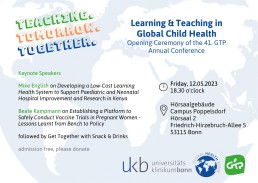
Under the guiding theme “Teaching. Tomorrow. Together. — Learning and Teaching in the Context of Global Child Health”, the meeting will take place from 12 to 14 May 2023 in the Beethoven and UN city of Bonn. In addition to various workshops and submitted abstracts, you can expect exciting keynote speeches from renowned speakers as well as the chance to make and refresh personal contacts.
Aspects of teaching and learning related to international child health will be presented in medical as well as socio-cultural thematic complexes in a global as well as local context. As usual, however, the annual conference also gives enough space to present other current and relevant aspects of global child health.
Together with you, we would also like to celebrate and cordially invite you to our social evening on 13 May 2023. We will sail on the Rhine through the night, want to eat and dance to live music.
We would like to make it possible for as many interested people as possible to attend and offer reduced prices for students and health professionals as well as childcare during the conference.
We are very much looking forward to your coming and to lively discussions.
Dr Andreas Schultz (Conference President) with Dr Claudia von Both, Dr Noa Freudenthal, Dr Andreas Hansmann, Andrea Jütte, Dr Sarah Kotsias-Konopelska, Dr Carsten Krüger, Eva Kuhn, Dr Hans-Jörg Lang, Dr Christian Schmidt and Dr Ralf Weigel

Conference program
Last Update: 20.04.23
Conference language: English
Nota bene: During the event, photos and films will be taken by the GTP and the Global Heath Section for public relations purposes.
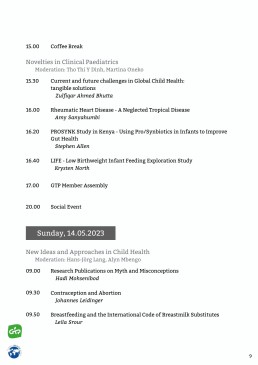
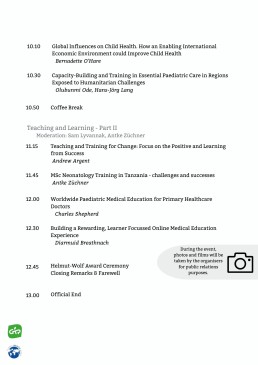
Details regarding workshops, fireside talks and the World Café are to be found here.
Call for abstracts
Abstract submission is closed.
The Scientific Committee of the annual conference 2023 of the Society for Tropical Paediatrics and International Child Health e.V. invites Global Child Health clinicians, practitioners, researchers and policy makers to submit their abstract for (poster) presentation. We look forward to scientific and/or clinical projects, thought-provoking questions and lessons learned.
You may submit your abstract as
- topical abstract – related to the overarching conference theme,
- a free abstract – not related to the conference theme, but still within the scope of Global Child Health.
The abstract can be accepted either as a presentation or a poster. If your abstract is accepted, you automatically take part in the selection process for the Helmut-Wolf-Preis. The price is awarded for the best presentation or poster on the conference.
Please submit your abstract to Globalhealthevents(a)ukbonn.de with the subject line “GTP-Abstract”.
Criteria for your Abstract
- Only submissions in English will be accepted.
- Submit your abstract as a PDF file.
- Give your full name and affiliation in the e-mail text.
- Do not include any personal information in the abstract document to enable blind review.
- Structure your abstract as follows:
- Research Abstract: title, research question, method, results, discussion
- Project Abstract: title, project description, lessons learned
- The abstract must not exceed 3.000 characters (including blank spaces).
- Indicate below the abstract
- if you deem it to be a topical or free abstract,
- if you prefer to present orally or a poster.
Venue
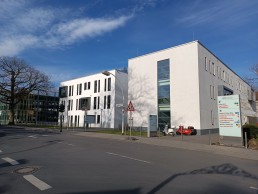
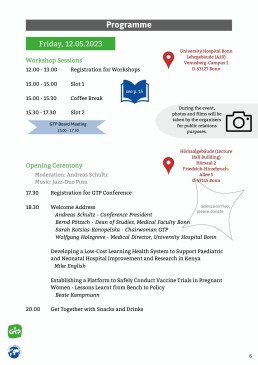
Workshop Sessions (Friday 13:00-17:30)
University Hospital Bonn
Lehrgebäude (A10)
Venusberg-Campus 1
D - 53127 Bonn
How to get there
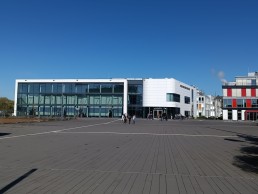
Opening ceremony (Saturday 18:30)
Hörsaalgebäude
Hörsaal 2
Friedrich-Hirzebruch-Allee 5
D - 53115 Bonn
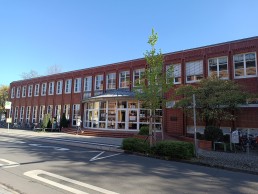
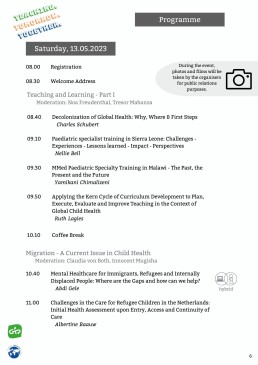
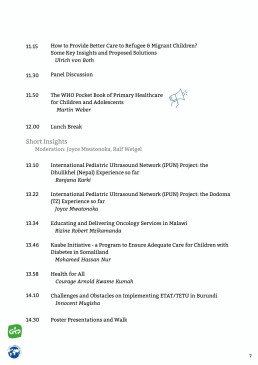
Conference program Saturday and Sunday
Anatomiegebäude
Hörsaal A
Nussallee 10
D - 53115 Bonn
How to get there
Social program
General Information
The conference team has created a PDF with useful information about sightseeing in Bonn.
Friday
Afternoon
Instead of a second workshop, we offer the opportunity to get to know Bonn better on a guided city tour. The city tour will then end at the location of the conference kick-off. Please let us know your interest in this city tour when registering (deadline: 20.4.23). For people who are not members of the GTP, a city tour on Saturday afternoon will be offered as an alternative.
Evening
Following the conference kick-off, we invite you to a get-together with snacks and drinks. Make new contacts, toast the reunion with colleagues and get into the conference mood.
Saturday
Afternoon
For people who are not members of the GTP, a guided city tour will be offered during the GTP general meeting. For GTP members, a city tour will take place on Friday afternoon.
Please let us know your interest in this city tour when registering (deadline: 20.4.23).
Evening
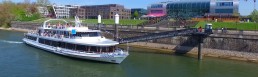
We cordially invite you to spend Saturday evening with a buffet and live music and dancing on the MS Poseidon. The ship will depart from bridge 13 after the MV at around 8 p.m. and will sail the Rhine towards Cologne and back towards Koblenz until around 1 a.m.. For all those who want to continue dancing after the end of the cruise, the conference office has further tips and information ready.
We also try to make it possible to leave the ship for the first time around 10.30/23 pm.
Accommodation
The conference organizers have created a list of hotels close to the conference venue of different prize categories. This list can be accessed here.
Registration, fees and cancellation policy
Conference fees
| Early bird (until incl. 28.2.23) | Regular fee (from 1.3.23) | ||
|---|---|---|---|
| GTP member | Physician | € 190 | € 210 |
| Student / non-physician health professional | € 80 | € 90 | |
| Non GTP member | Physician | € 210 | € 230 |
| Student / non-physician health professional | € 90 | € 100 | |
| Social evening | Regular | € 50 | € 70 |
| Student / non-physician health professional | € 30 | € 40 | |
| Accompanying person | € 50 | € 70 | |
| Children 0-10 years | € 0 | € 0 | |
| Children 10-14 years | € 25 | € 25 | |
| Day ticket Friday or Sunday (excl. social events) | To be payed cash or via direct transfer on site | € 70 | € 70 |
| Day ticket Saturday (excl. social events) | To be payed cash or via direct transfer on site | € 130 | € 130 |
| Day ticket Saturday (excl. social events) | To be payed cash or via direct transfer on site | € 30 | € 30 |
Discounts
We are pleased to offer you the following discounts.
| For invited speakers | No conference fee |
| For corresponding author with accepted abstract (presentation and poster) | For the corresponding author the conference fee will be reduced to the student fee. |
| For workshop leaders | Excemption from conference fee for one workshop leader per workshop |
| For students and apprentices | With presentation of a valid student ID students under the age of 31 years will have the opportunity to take part in the conference free of charge in exchange for being available for 6h or more as a conference facilitator. Indicate in the comments field if you wish to make use of this option. You will get access to a survey at the beginning of May where you can freely indicate when and how you want to help out. |
Credit points
CME points are applied for
Cancellation policy
- In case of cancellation up to and including 15.03.2023, we will refund the entire conference fee.
- In case of cancellation up to and including 10.04.2023, we will refund half of the corresponding conference fee.
- Unfortunately, we cannot make any refunds after 11.4.2023.
Conflicts of interest and Sponsoring
The content of this event will be designed to be product and service neutral. We confirm that the scientific management and the speakers will disclose potential conflicts of interest to the participants.
We would like to thank the following supporters, whose donations made it possible to hold this event:
Contact information
General inquiries and comments (not for registration): globalhealthevents(a)ukbonn.de
Registration: https://globalchildhealth.de/anmeldunggtp2023/
Banking details
Gesellschaft für Tropenpädiatrie und
Internationale Kindergesundheit (GTP) e. V.
Volksbank Ahlen-Sassenberg-Warendorf
IBAN: DE 95 4126 2501 1102 1632 03
BIC: GENODEM1AHL
Betreff: “GTP2023 Beitrag, Ihr Vor- und Nachname”
Abstract Submission: Closed
Klinikpartnerschaft GTP – Department of Paediatrics & Child Health an der Universität von Dodoma, Tansania (2021-2024)
Über das Projekt
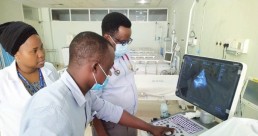
Im Rahmen der Initiative “Klinikpartnerschaften – Partner stärken Gesundheit”, finanziert durch die Else Kröner-Fresenius Stiftung (EKFS) und das Bundesministerium für wirtschaftliche Zusammenarbeit und Entwicklung (BMZ), technisch begleitet durch die Gesellschaft für internationale Zusammenarbeit (GIZ), engagiert sich die GTP in Fortführung des sehr erfolgreichen Facharztprogramms für angehende PädiaterInnen in Mwanza und Dodoma (2016 bis 2020) seit 2021 (Laufzeit bis 2024) in der pädiatrischen Facharztausbildung in Dodoma, Tansania. Aufgrund des weiterhin bestehenden Mangels an Pädiaterinnen und Pädiatern mit Subspezialitäten reisen Experten aus Deutschland und anderen europäischen Ländern mehrfach pro Jahr nach Tansania, um in Dodoma theoretischen Unterricht anzubieten. Darüber hinaus findet praktischer Unterricht bei Visiten und Klinikeinsätzen statt, Ultraschallkenntnisse werden ebenso vermittelt. Das Pflegepersonal wird durch erfahrene Kinderkrankenschwestern/-pfleger geschult. Fehlende Ausstattung wird in begrenztem Maße durch das Projekt beschafft. Die Entwicklung von Behandlungsrichtlinien ist Bestandteil des Projekts.
Möglichkeit zur Mitarbeit – Dozenten gesucht
- Fachärztinnen/-ärzte für Kinder- und Jugendmedizin inklusive aller Subspezialitäten
- Neonatologisch und pädiatrisch erfahrenes Pflegepersonal
Wir freuen uns auf Bewerbungen von GTP-Mitgliedern oder solchen, die es werden wollen, mit Interesse an einem Unterrichtseinsatz in Dodoma. Arbeitserfahrung im Ausland und in der Lehre sind von Vorteil, aber keine unabdingbare Voraussetzung.
- Einsatzdauer: 2-3 Wochen (Einsatzzeitpunkt flexibel)
- Voraussetzungen: Gute Englischkenntnisse
- Vergütung: Übernahme der Aufenthalts- und Reisekosten
Kontakt und Bewerbung
Bei Interesse schreiben Sie bitte mit einem kurzen Lebenslauf an:
PD Dr. Carsten Krüger (krueger(a)globalchildhealth.de) – Programmverantwortlicher in Deutschland
Dr. Shakilu Jumanne (shakiluj(a)gmail.com) – Projektleiter vor Ort
Registration for the GTP Annual Meeting in Eisenach from 12-14 April 2024
Dear colleagues and interested parties!
Please read the following information carefully before registering for the Annual Conference 2024 using the form below.
- Please note that registration via the form is binding.
- After sending the form, you will receive an automatic confirmation email with the information you have provided as well as account details for the transfer of the conference fee and other information. After receiving this email, you will then have four weeks to transfer your participation fee. Please check your spam.
- The current hygiene regulations regarding the COVID-19 pandemic will apply to conference participation at the time of the conference.
- If you have any questions, please contact the conference secretariat at gtp2024(a)globalchildhealth.de
Important notice:
If you need to apply for a visa to attend the conference, please note the following information:
- Please inform yourself BEFORE registering about the necessary documents, applicable processing times and available dates for issuing visas at the relevant embassy (we recommend at least 3-4 months lead time)
- A letter of invitation can only be issued after a) complete personal online registration (including passport number and request to receive a letter of invitation) and b) payment of the conference fees has been received.
- Please make sure that your passport is valid for at least 6 months after your return date
Bonus tickets and sponsorship of international guests
Support colleagues from LAMICs! Every year, we invite colleagues from low-and-middle-income countries (LAMICs) to our conference and the subsequent intensive course in tropical paediatrics and international child health. They make an invaluable contribution to international professional exchange and also have the opportunity to spend time shadowing in our partner clinics in Germany. Travel and stay are financed, among other things, by scholarships awarded by the GTP, which are financed by donations to the GTP and shares of course fees. You too can contribute to a scholarship by indicating a donation amount when you register. A contribution could look like this:
- 0-50 euros: scholarship grant for participation in the social evening
- 50-200 Euros: Scholarship grant for conference participation
- 200-500 euros: Scholarship grant to cover accommodation costs during a hospitation or intensive course
- 500-1000 euros: Scholarship grant to cover travel costs
Donations to the GTP e.V. are tax deductible. For donations of less than 200 euros, it is sufficient to submit a bank statement. For higher amounts we will issue a donation receipt.
IMPORTANT: Please transfer the donation indicated in the registration form separately with the subject “Donation GTP” in order to make it unmistakably identifiable for your tax return as well as for us. If the first name, surname or address for the donation receipt differs from the data given in the registration, please let us know in the comments field.
Cancellation policy
- Cancellation up to and including 28.02.2024: Full refund of participation fees.
- Cancellation up to and including 20.03.2024: 50% of the participation fee has to be paid
- Cancellation after 20.03.2024: 100% of the participation fee must be paid.
Conference fees GTP2023
| Early bird (until incl. 31.1.24) | Regular fee (from 1.2.24) | ||
|---|---|---|---|
| GTP member | Physician | € 150 | € 180 |
| Student / non-physician health professional | € 30 | € 50 | |
| Non GTP member | Physician | € 180 | € 210 |
| Student / non-physician health professional | € 40 | € 60 | |
| Social evening | Regular | € 40 | € 40 |
| Student | € 20 | € 20 | |
| Accompanying person | € 40 p.p. | € 40 p.p. | |
| Day ticket Saturday or Sunday | In case of last minute booking payment is made cash or via direct transfer on site | € 90 per day | € 90 per day |
Registration form for the 41. GPT Annual Conference from 12-14 April 2024 in Eisenach:
Registration for TropPaed 15.-19. April 2024
Dear colleagues,
Thank you for your interest in participation in the TropPaed course. Register via our online form (see below). Your registration is binding.
Please note following information prior to registration:
Course schedule
– Arrival: from Sunday 14th April 2024 from 17:00. Dinner will be served, please indicate in your registration if you wish to have dinner or let us know latest a week prior to your arrival in order for us to be able to plan for the correct amount of people.
– Program starts: Monday 8:45
– Check-out from the rooms: Friday before breakfast
– Course end and departure: Friday around 14:00 after lunch
Prerequisites for course participation.
– Complete vaccine record against COVID-19 (vaccine must be approved in Germany) or condition after passed infection. Proof must be presented at registration.
Mentoring our international guests
In recent years, we have introduced that there are voluntary primary contact persons for our international guests within the European participant group, which was perceived by both sides as very positive. As a so-called mentor, you are the contact person for general questions that do not concern the course organization, feel responsible to see if everything is in order, engage in communication and may even be a room neighbor. Feel free to sign up as a mentor when you register.
Course fees
Our course fees are calculated to exactly match the course costs after deduction of sponsoring without making any profit. Course costs include full board at the castle, room rent, travel and accommodation costs for lecturers and organizers as well as the scholarships for our international guests. All organizers work on a voluntary basis, lecturers do not receive salaries.
Cancellation Policy.
If you need or chose to withdraw your course registration we will try to fill your spot with someone from the waiting list. Additionally you will have the chance to present a substitute yourself. If your registration can be filled with someone else, we will refund you with the full course fees minus a 50 Euro handling fee. If your spot cannot be filled, we will charge you the full course fee.
COVID-19 pandemic – further regulations.
– If there are requirements at the time of the course regarding mandatory testing for Sars-CoV-2 or other pathogens, we reserve the right to have you perform appropriate tests independently or on site at your own expense.
– The course concerning hygiene regulations we will published and updated on our website.
GTP annual meeting in Eisenach from 12.-14. April 2024
Prior to the TropPaed course the 42nd GTP Annual Conferece is going to take place in Eisenach. We are cordially inviting you to join us there. If you can offer free seats in your car, please indicate so at registration.
For queries of any kind regarding the course, please do not hesitate to contact us: troppaed(a)globalchildhealth.de
Registration for the TropPaed course 15.-19. April 2024.
You will receive a registration confirmation immediately after sending the registration form. Please also check your spam folder. If you do not receive any email your registration was not successful.
TropPaed 2023 - Intensive Course on Tropical Paediatrics and Global Child Health
FULLY BOOKED!!! The five-day intensive course on Tropical Paediatrics and Global Child Health has been held annually since 2010, is continuously developed and addresses the most important medical, intercultural, political and infrastructural challenges of global paediatrics.
Date
15-19 May 2023
(Arrival: 14 May 2023)
Venue
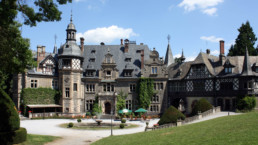
Schloß Rauischholzhausen
Info
Participants: max. 50
Course language: Englisch
Welcome
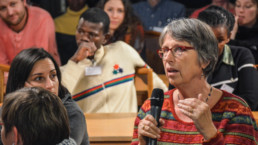
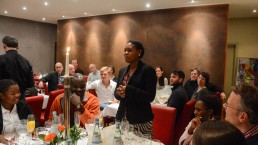
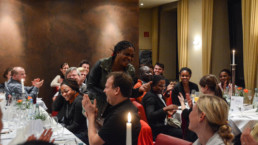
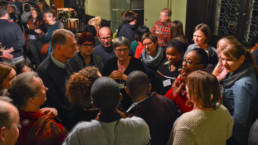
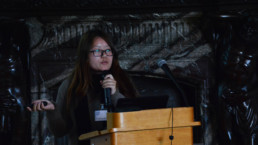
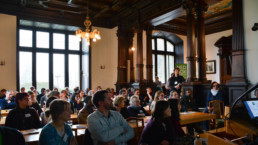
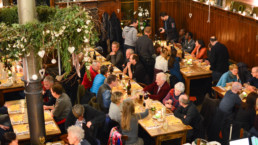
After the cancellation of the course in 2021 due to the pandemic and the postponement of the TropPaed course and the GTP annual conference to the warm season in order to minimise the risk of a face-to-face event due to COVID-related restrictions, we are pleased to invite you to Rauischholzhausen for a second time in May!
We would like to offer you again a varied programme of lectures, practical small group work and clinically oriented seminars. In addition, there will be plenty of time for international exchange of plans and experiences.
As our planning progresses, you will continually find more details about the timetable and lecturers on this page.
Preliminary program
Here you will find the preliminary topics of the course. On some days, case studies of the international guests will be presented and an evening programme will take place.
Please note: small changes to time and in rare cases content of lectures can occur
Possibility of dinner on the day of arrival (start between 19-20 hrs).
Daily breakfast (7-8:30), lunch (approx. 12:45-14:15) and dinner (approx. 18:45-20)
Two coffee breaks
Partial optional evening programme after dinner
Thursday evening: Farewell party with theme!
Departure on Friday after lunch around 14:00.
COVID-19: Current regulations will be announced before the course starts.
Optional possibility of arrival already on Sunday.
Check-in from 5 pm with dinner around 7-8 pm.
Start: approx. 8:45 — End: approx. 21:00
- ntroduction round
- Introduction to Global Child Health (C. Krüger)
- Programs in international / global health (L. Molyneux)
- Antibiotic stewardship (S. Kotsias-Konopelska)
- Ward management (I. Schmidt, Sr. Sophia)
- Neglected tropical diseases (C. Rothe)
- Sickle cell disease (J. Mwatonoka)
- Intercultural communication (A. Züchner)
- Case presentations
- Climate change (S. Lorenz)
- Evening program: Discussion on climate change
Start: approx. 8:45 — End: approx. 21:00
- The critically ill child (K. van ‘t Ende)
- Introductions to: Malaria (R. Kobbe), Severe malnutrition (J. Lindert, K. Baumgartner), neurological emergencies (T. Oneko), ETAT (L.Molyneux, AG ETAT)
- Practical small groups on: Shock, severe malnutrition, neurological and respiratory emergencies, ETAT, malaria
- Case presentations
- Decolonizing health (H. Mirza)
Start: approx. 8:45 — End: approx. 21:00
- Neonatology in resource limited settings (L. Molyneux, M. Köhler)
- Obstetrics in resource limited settings (C. Hach)
- Practical small groups on: CPAP/KMC, neonatal rescucitation, gastroschisis, neonatology, interventions
- Surgery as component of Global Child Health (J. Lindert, T. Mabanza)
- Research in resource limited settings (xxx)
- Evening program: with whom and how to go abroad
Start: approx. 8:45 — End: approx. 21:00
- Tropical dermatology (C. Adamczick)
- Implementing ultrasound in paediatrics in LMIC (C. Schmidt)
- Case presentations
- Paediatric oncology in Malawi (R. Mzikamanda)
- Palliative care im LMIC (S. Loetz)
- Introduction to: Malnutrition (M. Krawinkel), tuberculosis (F. Brinkmann), HIV (xxxx)
- Practical small groups on: malnutrition, HIV/AIDS, tuberculosis
- Farewell party
Start: approx. 8:45 — End: approx. 14:00
- Practical small groups on: malnutrition, HIV/AIDS, tuberculosis
- Laboratory in basic conditions (xxx)
- Caring for remote populations (P. Santacruz Ortega)
- Feedback and farewell
Course fee and registration
The price includes course participation, accommodation from 14-19 May, meals and coffee breaks from Sunday (dinner) to Friday (lunch) and course materials. The price does not include alcoholic beverages and drinks outside of those served at meals and coffee breaks, as well as transport costs and any compulsory Sars-CoV-2 testing we may incur.
Scholarships for colleagues from LMIC are available. Applications will be received until Octobre 15th 2022 (to: gtpscholarships(a)globalchildhealth.de). Please send us a motivational letter, CV and reference letter. Further details: “Förderung internationaler Kollegen“.
Regular fee non-member
from 16.3.23Regular fee non-member
Early Bird until 15.3.23Member of GTP/ESPID
from 16.3.23Mitglieder-Preis GTP/ESPID
Early Bird until 15.3.23Venue
We are pleased to be able to hold our course again at Schloss Rauischholzhausen, the conference and training centre of the University of Gießen. This historic and beautiful venue is perfect for our course as it offers the possibility of accommodating all participants, organisers and lecturers in one place, good facilities and a very fair financial framework. The versatile room selection meets our demand of lectures combined with small group work. Catering includes three main meals and two coffee breaks per day. All but one main meal will be vegetarian. Hosting the course there for the first time in 2016 has proven to be a complete success. We will keep you informed about current Sars-CoV-2 hygiene regulations here on our homepage.
Sponsoring and support
We sincerely thank all the volunteer co-organisers of the course for their years of dedication as well as our financial supporters!
We assure you that our intensive course is designed to be product and service neutral and all content is independent of commercial interests. No services and/or products are advertised. Possible conflicts of interest are disclosed in a self-disclosure.