


Feature

Assistenzarzt für Pädiatrie (m/w/d) - St. Franziskus-Hospital Ahlen
Das St. Franziskus-Hospital Ahlen sucht einen leidenschaftlichen und engagierten Assistenzarzt (m/w/d), der seine Karriere in der Pädiatrie vorantreiben möchte.
Einstiegszeitpunkt: ab sofort
Arbeitszeitmodell: Voll- oder Teilzeit
Schwerpunkte:
- Die Kinderklinik verfügt über 34 Regelbetten, davon vier Intensivbetten, und versorgt jährlich etwa 2.100 stationäre und rund 8.000 ambulante Patienten.
- Die Pädiatrie mit einem perinatalen Schwerpunkt und Kinder- und Jugendlichen-Psychosomatik.
- Neben der pädiatrischen Behandlung umfassen die Schwerpunkte der Abteilung Epileptologie/Neuropädiatrie, Psychosomatik, Gastroenterologie, Kardiologie, Endokrinologie, Diabetologie, Allergologie/Pneumologie und Infektiologie.
Ihre Aufgaben:
- Medizinische Behandlung unserer Patienten im Team
- Teilnahme am Bereitschaftsdienst
- Konstruktive Zusammenarbeit mit allen Fachabteilungen
Ihr Profil :
- Eine fachlich und menschlich engagierte und interessierte Persönlichkeit
- Gerne bereits klinische Erfahrung in der medizinischen Versorgung und Betreuung von ambulanten und stationären pädiatrischen Patienten (keine Bedingung)
- Freundliches Auftreten, Kommunikationskompetenz, Kontaktfreude und Spaß an der Arbeit im Team
Ihre Vorteile:
- eine qualifizierte und strukturierte Facharztweiterbildung, ggf. mit flexiblen Teilzeitmodellen
- Unterstützung internationalen Engagements im Bereich der globalen Kindergesundheit sowie Betreuung von Promotionen
- ein persönliches Fortbildungsbudget sowie die kostenlose Übernahme des Strahlenschutzkurses
- preisgünstige Verpflegungsmöglichkeiten im Haus und Unterstützung bei der Wohnungssuche
Ist Ihr Interesse geweckt? Dann bewerben Sie sich hier!
Weitere Informationen finden Sie hier.
Rückfragen? Jederzeit gern.
Für weitere Informationen steht Ihnen Herr PD Dr. Krüger, Chefarzt der Abteilung, unter der Telefonnummer 02382 / 858 – 966 gern zur Verfügung.


IPUN Ultrasound Courses
This page informs about the activities of the GTP in the field of paediatric ultrasound diagnostics. This page is under development and will receive more comprehensive information as it progresses. Please feel free to visit us regularly.
Registration for ultrasound courses:
The course list in the grey box provides information about places still available on the individual courses.
Registration is binding and must be made using the online form below. After receipt of your registration, you will first receive an automated confirmation of receipt with further important information and then a final confirmation of your place from the organisation team, along with a payment request.
GTP ultrasound courses – timeline
Since 2017, we have been offering ultrasound courses internationally. These courses provide you with the opportunity to explore typical findings alongside experienced course leaders in various regions and also allows you to discover parts of the respective country during your free time. The courses are mainly aimed at young residents who learn together with the residents of the specialist programme and young local specialists with little or no prior experience in sonography.
In 2021, the GTP received a 5-year funding from EKFS to professionalize and integrate course structures locally, as well as to establish the “EKFS GPT International Paediatric Ultrasound Network”.
Basic course
Sonography of the skull, thorax and abdomen for basic diagnosis of pathologies and performance of interventions such as pleural puncture.
Echocardiography
Cardiac sonography focusing on mastering key sectional views and recognizing common pathologies.
General course information
- Course language: English
- Participants: 15-20 local medical personal, some courses are open for non-local participants
- Course fees: Single 4-day-course 400 euros, single 5-day-course 500 euros, two combined courses 700-900 euros, combination of three courses 1000-1300 euros
- Not included in the course fee: travel expenses, accommodation, visas, travel insurance, vaccinations and malaria prophylaxis and other travel arrangements. We kindly ask you to organize these independently, but we are happy to provide recommendations and assistance.
- Cancellation policy: in case of cancellation 4-8 weeks before the start of the course, we retain 50% of the course fees; in case of cancellation 4 weeks or less before the start of the course, we retain 90% of the course fees. This is necessary to cover cancellation costs.
- General inquiries (not application): please email at ipun-info(a)globalchildhealth.de
Next courses
Places for non-lokal participants: 2-3 participants
Places for non-lokal participants: 2-3 participants
Places for non-lokal participants: 4 participants
Places for non-local participants: 1-2 participants
Places for non-local participants: 1-2 participants
Placements for non-local participants: 1-2 available
Places for non-lokal participants: available (1-2 places)
Places for non-lokal participants: available (1-2 places)
Places for non-lokal participants: available (1-2 places)
Places for non-lokal participants: available (1-2 places)
Registration
We are very much looking forward to your participation! Please take a moment to read the cancellation policy and fill out the form below completely.
Your registration is binding and you will receive an automated confirmation of receipt.
A final confirmation with request for payment will be made by the organisation team after checking the local course capacities. Please do not book flights etc. until you have received final confirmation.
Cancellation policy:
If you cancel your participation, we will apply a 50% charge of the course fee for cancellations made between 4-8 weeks before the course, and a 90% charge for cancellations made 4 weeks or less before the course begins.
Registration form

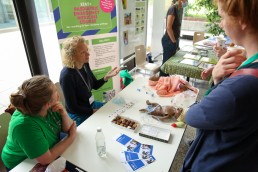
Paediatric ETAT+ Trainings 2024
3.-5.5.24 in Hamburg (ETAT+ Course)
31.5.-2.6.24 in Münster (ETAT Instructor Course)
27.9.-29.9.24 in Stuttgart (ETAT+ Course)
Overview
- Target group: Medical health professionals with work experience in preparation for an assignment abroad in LMIC (e.g. doctors, nurses, midwives, paramedics; no students, sorry!)
- Course language: English
- Course organizer: AG ETAT of the GTP
- Stuttgart: Stuttgart Pediatric and Patient Simulator (STUPS)
- Hamburg: Children’s Hospital Wilhelmstift
- Course fees: Physicians 380€, all others 190€.
- Registration
The ETAT concept
ETAT+ (Emergency Triage Assessment and Treatment) is a structured and proven effective intervention specifically designed for use in primary health care settings with limited resources in East Africa and Asia. It is used to reach the poorest and most vulnerable children in rural areas.
ETAT guidelines are designed to address common pediatric issues within health facilities in resource-limited settings where
- Mortality of hospitalized children is high.
- Many children die within the first 24 h of inpatient admission.
Common barriers in such settings are: inadequate medical care, lack of skills, especially in primary care, no or few written treatment protocols, delays in starting treatment. The ETAT guidelines were developed by the WHO and are an adapted form of the Advanced Paediatric Life Support (APLS) guidelines, which are used as standard in industrialized countries. ETAT is used to identify acute life-threatening situations in children that are particularly common in resource-limited settings, such as airway obstruction and other acute infection-related respiratory problems, shock, severe impairment of consciousness (e.g., coma or convulsions), and severe dehydration. In a structured and easy-to-understand manner, ETAT offers a blueprint for recognition and treatment.
The ETAT guidelines were developed in Malawi and clinically tested in several countries, including Angola, Brazil, Cambodia, Indonesia, Kenya and Niger.
In many areas, ETAT is a cornerstone of first contact with patients.
The paediatric ETAT+ Course
Within the GTP, the ETAT WG was created on the initiative of three graduates of the TropPaed intensive course, who experienced the clinical significance of ETAT in various assignments abroad, trained as tutors and led courses abroad themselves. The first ETAT+ course was successfully hosted in Witten/Herdecke in September 2018 and was very well received. The course is now offered on a regular basis.
The course aims to improve global child health by training professionals and teaching them strategies for triage and treatment of sick children in resource-limited settings. It provides an introduction to a well-organized, high-quality approach to pediatric primary care that can significantly reduce hospital mortality among children.
Course content
Preparation material is provided and students are expected to engage with selected topics in advance.
The course will focus on interactive training sessions and role-playing, each introduced by lectures:
- Triage of sick children into the following categories:
- Children with acute problems (“emergency signs”).
- Children with urgent problems (“priority signs”)
- Children with symptoms that do not require urgent intervention.
- Assessment of airway and breathing and initiation of adequate emergency treatment
- Bag ventilation
- Assessment of cardiac situation and level of consciousness
- Adequate treatment of shock, coma and seizures in children
- Intraosseous access
- Classification and treatment of severe dehydration in children with diarrheal disease
- Management of acute severe malnutrition
- Management of a sick newborn and premature infant
- Classification and treatment of burns and accidental injuries in children
- Planning and implementation of the ETAT concept in one’s own work environment
Feedback from course participants
“I liked all of the practical sessions – all very useful.”
“Very practical and structured training.”
“I liked the trainer team: good mixture, lots of experience, passionate teaching.”

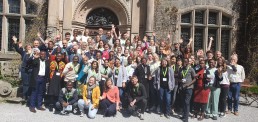
TropPaed 2025 - 15th Intensive Course on Tropical Paediatrics and Global Child Health
Date
5-9 May 2025
(Arrival: 5 May 2025)
Venue
To be confirmed
Info
Participants: 50
Course language: English


Welcome
We are pleased to invite you to the TropPaed Intensive Course 2025 in May!
We would like to offer you once again a diverse program of lectures, practical small group work, and clinically oriented seminars. Additionally, we aim to allocate ample time for international exchange of your experiences.
Throughout our planning process, you will continuously receive further details regarding the schedule and speakers on this page.
Fees and Registration
The course fees are non-profit and calculated to cover course costs and to co-finance participation of international scholarship holders. The price includes course participation, accommodation from 5-9 May 2025, meals and coffee breaks from Sunday (dinner) to Friday (lunch). The price does not include alcoholic beverages and drinks outside of those served at meals and coffee breaks, as well as transport costs.
Detailed participant fees will be announced shortly.
Scholarships for colleagues from low- and middle-income countries (LMICs) will also be available for the 2025 course! To apply, please submit a motivational letter, CV, and reference letter to gtpscholarship@globalchildhealth.de. Further details can be found under “Sponsoring of International Colleagues“.
Application deadline: September 15th 2024
Cancellation Policy:
If you need to withdraw your course registration, we will endeavor to fill your spot with someone from the waiting list. Alternatively, you may propose a substitute attendee. If we successfully fill your spot, you will receive a refund of the full course fees, minus a 50 Euro handling fee. However, if we are unable to fill your spot, the full course fee will be charged.
Venue
To be confirmed
Sponsoring and support
We sincerely thank all the volunteer co-organisers of the course for their years of dedication as well as our financial supporters!
We want to assure you that our TropPaed Intensive Course is meticulously designed to maintain neutrality regarding products and services, with all content being independent of commercial interests. We do not endorse or advertise any specific services or products. Any potential conflicts of interest are transparently disclosed through self-disclosure.


43rd GTP Annual Conference 2025 - Giessen
Date
2-4 May 2025
Venue
Giessen
Organiser
Prof. Knipper & Team
43rd GTP Annual Conference
2-4 May 2025
Giessen, Germany
Topic: Decolonising Global Child Health
CME Credit Point: tba
Welcome address
tba
Program
Last update: tba
Conference languages: German and English (will be confirmed)
Nota bene: Photos and videos will be taken during the event to publicize the GTP and its projects
Call for abstracts
tba
Venue
tba
Program surrounding the conference
tba
Accommodation
tba
Registration, fees and cancellation policy
Important notice:
If you need to apply for a visa to attend the conference, please note the following information:
Please inform yourself BEFORE registering about the necessary documents, applicable processing times and available dates for issuing visas at the relevant embassy (we recommend at least 3-4 months lead time)
A letter of invitation can only be issued after a) complete personal online registration (including passport number and request to receive a letter of invitation) and b) payment of the conference fees has been received.
Please make sure that your passport is valid for at least 6 months after your return date.
Conference fees
tba
CME Point
tba
Cancellation policy
tba
Conflincts of interest and Sponsoring
The content of this event will be designed to be product and service neutral. We confirm that the scientific management and the speakers will disclose potential conflicts of interest to the participants.
Contact details
General inquiries and comments (not for registration): tba
Registration: tba
Banking details
Gesellschaft für Tropenpädiatrie und
Internationale Kindergesundheit (GTP) e. V.
Volksbank Ahlen-Sassenberg-Warendorf
IBAN: DE 95 4126 2501 1102 1632 03
BIC: GENODEM1AHL
Reference: “GTP2025 fee, your name and surname”
Abstract submission deadline: tba

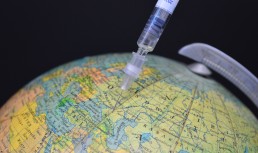
Pressemitteilung zur Weltimpfwoche (24.-31.4.23)
Dramatischer Rückgang der Kinderimpfquoten weltweit
Die deutsche Gesellschaft für Tropenpädiatrie und Internationale Kindergesundheit e.V. (GTP)* beobachtet seit Beginn der COVID-19-Pandemie mit großer Sorge, dass in den Jahren 2020 und 2021 weltweit 23 bzw. 25 Millionen Kinder nicht gegen die im WHO-Impfplan aufgeführten Infektionskrankheiten (Tuberkulose, Tetanus, Diphtherie, Pertussis, Poliomyelitis, Haemophilus influenzae Typ b, Hepatitis B, Pneumokokken, Rotaviren, Masern, Röteln, Humanes Papillomavirus) geimpft worden sind. Seit 2019 haben damit laut dem aktuellen UNICEF-Jahresbericht 67 Millionen Kinder keinen umfassenden Impfschutz erhalten.1 Die Errungenschaften von 15 Jahren weltweiter Impfkampagnen sind innerhalb von zwei Jahren verloren gegangen, die Impfquoten liegen nur noch bei 81% und damit auf dem Niveau von 2008. Besonders Asien und Teile Afrikas sind von dem Rückgang stark betroffen.
Dieser Rückschritt bei den Impfraten gefährdet die Gesundheit der Kinder und ihrer Familien nachhaltig. Schon jetzt ist weltweit ein deutlicher Anstieg bei den Masernerkrankungen und Poliomyelitisfällen zu beobachten. Eine Elimination bzw. Eradikation dieser beiden gefährlichen Virusinfektionen rückt damit in weite Ferne. Zudem zeigen wissenschaftliche Daten der vergangenen Jahre, dass es sehr schwierig ist, diejenigen Kinder zu erreichen, die bisher nicht geimpft worden sind, und somit die Impflücken zu schließen. Die WHO, UNICEF und weitere Partner haben eine weltweite Kampagne mit dem Titel „The Big Catch-Up“ gestartet, um der jetzigen besorgniserregenden Entwicklung entgegenzuwirken.2
Die GTP appelliert daher eindringlich an die Bundesregierung sowie die Ministerien für Gesundheit (BMG), Finanzen (BMF) und Wirtschaftliche Zusammenarbeit und Entwicklung (BMZ), sich international intensiv zu engagieren, indem unser Land sowohl finanziell als auch logistisch alle Programme langfristig unterstützt, die es ermöglichen, dass jedes einzelne Kind auf diesem Globus alle erforderlichen Impfungen erhält und dass größte Anstrengungen unternommen werden, auch die Kinder zu erreichen, die bisher nicht von den Impfprogrammen profitiert haben. Die GTP unterstützt ebenso den Appell der International Pediatric Association (IPA)3 und aller ihrer Mitgliedsverbände, vernehmbar und energisch für das Wohl aller Kinder zu kämpfen, denn nur gemeinsam können wir das Ziel hoher Impfraten erreichen.
Siehe auch: Newsrubrik im Deutschen Ärzteblatt
Informationen zur GTP:
Die Gesellschaft für Tropenpädiatrie und Internationale Kindergesundheit e.V. ist die einzige wissenschaftliche Fachgesellschaft in Deutschland, die sich im Verbund mit internationalen Partnern seit über 20 Jahren dafür einsetzt, die gesundheitliche Situation aller Kinder von Geburt bis zum Erreichen des Erwachsenenalters nachhaltig zu verbessern und damit den Kindern und ihren Familien eine Zukunftsperspektive zu ermöglichen. Aktivitäten der GTP in Deutschland umfassen einen jährlichen Kongress mit internationaler Beteiligung, Intensivkurse zu Fragestellungen der globalen Kindergesundheit sowie die Mitgliedschaft und aktive Mitarbeit in verschiedenen wissenschaftlichen und gesundheitspolitischen Gremien. Ferner engagiert sich die GTP seit vielen Jahren in Projekten in Asien (Nepal) und Afrika südlich der Sahara (Tansania, Malawi, Burundi), die die Weiterbildung von ärztlichen und anderen Fachkräften und die Qualitätsverbesserung in der Gesundheitsversorgung von Kindern zum Ziel haben. Diese Projekte orientieren sich an den Zielsetzungen der jeweiligen Länder und werden mit siebenstelligen Beträgen vom BMZ und privaten Stiftungen gefördert.
Kontaktdaten:
Gesellschaft für Tropenpädiatrie und Internationale Kindergesundheit e.V. (GTP)
Dr. med. Sarah Kotsias-Konopelska, Vorsitzende
Dr. med. Christian Schmidt, Vorsitzender
PD Dr. med. habil. Carsten Krüger, Ehrenvorsitzender
Geschäftsstelle am Standort St. Vinzenz-Hospital
Andrea Jütte Dr.-Otto-Seidel-Straße 31-33
46535 Dinslaken
Telefon: 0177 401 48 05 (Mo-Fr 18-20 Uhr)
Email: info@globalchildhealth.de
www.globalchildhealth.de
Quellen:
1 UNICEF: The State of the World’s Children 2023: For Every Child, Vaccination. https://www.unicef.org/pressreleases/sowc_2023_immunization
2 https://www.who.int/campaigns/world-immunization-week/2023
3 IPA: https://ipa-world.org/
Klinikpartnerschaft GTP – Department of Paediatrics & Child Health an der Universität von Dodoma, Tansania (2021-2024)
Über das Projekt
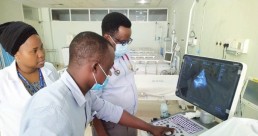
Im Rahmen der Initiative “Klinikpartnerschaften – Partner stärken Gesundheit”, finanziert durch die Else Kröner-Fresenius Stiftung (EKFS) und das Bundesministerium für wirtschaftliche Zusammenarbeit und Entwicklung (BMZ), technisch begleitet durch die Gesellschaft für internationale Zusammenarbeit (GIZ), engagiert sich die GTP in Fortführung des sehr erfolgreichen Facharztprogramms für angehende PädiaterInnen in Mwanza und Dodoma (2016 bis 2020) seit 2021 (Laufzeit bis 2024) in der pädiatrischen Facharztausbildung in Dodoma, Tansania. Aufgrund des weiterhin bestehenden Mangels an Pädiaterinnen und Pädiatern mit Subspezialitäten reisen Experten aus Deutschland und anderen europäischen Ländern mehrfach pro Jahr nach Tansania, um in Dodoma theoretischen Unterricht anzubieten. Darüber hinaus findet praktischer Unterricht bei Visiten und Klinikeinsätzen statt, Ultraschallkenntnisse werden ebenso vermittelt. Das Pflegepersonal wird durch erfahrene Kinderkrankenschwestern/-pfleger geschult. Fehlende Ausstattung wird in begrenztem Maße durch das Projekt beschafft. Die Entwicklung von Behandlungsrichtlinien ist Bestandteil des Projekts.
Möglichkeit zur Mitarbeit – Dozenten gesucht
- Fachärztinnen/-ärzte für Kinder- und Jugendmedizin inklusive aller Subspezialitäten
- Neonatologisch und pädiatrisch erfahrenes Pflegepersonal
Wir freuen uns auf Bewerbungen von GTP-Mitgliedern oder solchen, die es werden wollen, mit Interesse an einem Unterrichtseinsatz in Dodoma. Arbeitserfahrung im Ausland und in der Lehre sind von Vorteil, aber keine unabdingbare Voraussetzung.
- Einsatzdauer: 2-3 Wochen (Einsatzzeitpunkt flexibel)
- Voraussetzungen: Gute Englischkenntnisse
- Vergütung: Übernahme der Aufenthalts- und Reisekosten
Kontakt und Bewerbung
Bei Interesse schreiben Sie bitte mit einem kurzen Lebenslauf an:
PD Dr. Carsten Krüger (krueger(a)globalchildhealth.de) – Programmverantwortlicher in Deutschland
Dr. Shakilu Jumanne (shakiluj(a)gmail.com) – Projektleiter vor Ort
Aktualisierte Leitlinie: Empfehlungen zur infektiologischen Versorgung von Flüchtlingen im Kindes- und Jugendalter in Deutschland
Wir zitieren hier den Text der offiziellen Pressemitteilung, der im Original auf der Seite der DGKJ veröffentlicht wurde.
Geflüchtete Kinder brauchen eine spezielle medizinische Versorgung
Aktuelle Empfehlungen zur infektiologischen Versorgung von Flüchtlingen im Kindes- und Jugendalter in Deutschland
Um geflüchteten Kindern eine kompetente medizinische Unterstützung geben zu können, ist eine strukturierte Versorgung unverzichtbar. Für die sinnvolle und notwendige Infektionsprävention und -diagnostik wurden jetzt spezielle Fachempfehlungen vorgelegt.
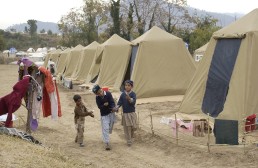
Ob geflohen vor Kriegen, Naturkatastrophen oder Armut - geflüchtete Kinder haben eine oft extrem belastende Zeit hinter sich, lange, strapaziöse Reisen, traumatische Erlebnisse. Je nach Herkunftsland war ihre medizinische Versorgung auch schon vor der Flucht mangelhaft und die Gesundheitsbelastung groß. Diese Kinder und Jugendlichen müssen hier in einer speziell geschulten medizinischen Betreuung aufgefangen werden, um ihre besonderen Gesundheitsrisiken und -bedürfnisse erkennen und kompetent versorgen zu können.
In die Empfehlungen flossen Erfahrungen zum medizinischen Bedarf von Flüchtlingen und insbesondere auch über die Prävalenz von spezifischen Infektionserkrankungen ein, die Mitarbeiter/-innen des Gesundheitssystems bezüglich seit 2015 sammeln konnten. Zwischen 40.000 und 200.000 minderjährige Flüchtlinge im Jahr suchen seither Schutz in Deutschland [vgl. Empfehlungen, S.19]. Auch für die kommenden Jahre ist eine hohe Zahl an Flüchtlingen zu erwarten, aktuell insbesondere aus dem Kriegsgebiet in der Ukraine.
Die Stellungnahme wurde als AWMF-Leitlinie der Stufe 1 angelegt und von der Deutschen Gesellschaft für Pädiatrische Infektiologie (DGPI e.V.), der Gesellschaft für Tropenpädiatrie und Internationale Kindergesundheit (GTP e.V.), dem Berufsverband der Kinder- und Jugendärzte (BVKJ e.V.) und der Deutschen Gesellschaft für Kinder- und Jugendmedizin (DGKJ e.V.) erarbeitet. Zahlreiche weitere Fachgesellschaften und Organisationen wurden einbezogen.
Die jetzt vorgelegten Empfehlungen zielen darauf,
- einen unvollständigen Impfschutz frühzeitig zu erkennen und rasch zu vervollständigen (z.B. Poliomyelitis, Masern, COVID-19)
- übliche Infektionskrankheiten im Kindes- und Jugendalter, auch vor dem Hintergrund von Sammelunterkünften, Sprachbarrieren und unterschiedlichen kulturellen Auffassungen, zu diagnostizieren und zu behandeln
- in Deutschland seltene Infektionskrankheiten frühzeitig zu erkennen und zu therapieren (z.B. Tuberkulose, Dengue-Fieber).
Den Autor/-innen ist sehr bewusst, dass Kindergesundheit weit mehr braucht als einen guten infektiologischen Schutz: Psychische Gesundheit und ein sicheres und fürsorgliches Umfeld, Integration und Bildungschancen sind zentrale Aspekte für das gesunde Aufwachsen von Kindern und Jugendlichen mit Fluchterlebnissen.
Eine strukturierte und adäquate medizinische Versorgung ist ein unverzichtbarer Beitrag, der aber politisch auch abgesichert werden muss: Noch gibt es weder im ambulanten noch im stationären Bereich ausreichend Personal und finanzielle Mittel hierfür – angesichts der auch in Zukunft zu erwartenden hohen Zahl an minderjährigen Flüchtlingen eine akute Herausforderung, die eine vordringliche Aufgabe der Politik sein muss.
Hier finden Sie die aktualisierten Empfehlungen zur infektiologischen Versorgung von
Flüchtlingen im Kindes- und Jugendalter in Deutschland
Nachruf: Prof. Dr. Michael Leichsenring
 Nachruf Prof. Dr. Michael Leichsenring
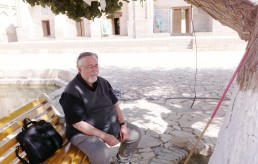
Im Alter von 68 Jahren verstarb bereits am 19.1.2022 Prof. Dr. med., Prof. h.c. (RSSPMCP) Michael Leichsenring. Bis zuletzt galt sein unermüdliches Wirken der Verbesserung der Kindergesundheit weltweit.
Leichsenring studierte von 1978-1984 Humanmedizin in Düsseldorf und erwarb von 1981-1983 parallel ein Diplom in Afrikanologie/Kisuaheli an der Universität Köln. 1984 absolvierte er auch den Diplomkurs des Bernhard-Nocht-Instituts in Hamburg. 1985 begann er die Weiterbildung zum Kinder- und Jugendarzt an der Kinderklinik der Universität Düsseldorf, die er ab 1987 an der Kinderklinik der Universität Heidelberg fortsetzte und 1992 abschloss und sich 1993 für das Fach Kinderheilkunde habilitierte. In den Abteilungen Allgemeine Pädiatrie und für Neonatologie der Kinderklinik der Universität Heidelberg arbeitete er von 1993 bis 1995 als klinischer Oberarzt, wobei er sein früher aufgenommenes Engagement für die Gesundheit und Ernährung von Kindern in Entwicklungsländern fortsetzte und 1995 bis 1997 die Sektion Tropenpädiatrie leitete. 1999 folgte er dann einem Ruf auf eine Professur an der Kinderklinik der Universität Ulm, die mit der Funktion des geschäftsführenden Oberarztes verbunden war. Außerdem leitete er die Bereiche Pneumologie/Mukoviszidose, Allergologie und Stoffwechselerkrankungen, wo er sich unermüdlich und mit großer Hingabe für Patienten mit seltenen Erkrankungen einsetzte. Im Jahr 2019 wurde er in den Ruhestand versetzt.
Neben seiner klinischen Tätigkeit interessierten Michael Leichsenring das Leben und die gesundheitlichen Herausforderungen fremder Nationen und Kulturen und insbesondere die Ausbildung von Ärztinnen und Ärzten in der Kinderheilkunde. Aus dieser Tätigkeit ist nicht nur die Motivierung zahlreicher junger Kolleginnen und Kollegen für eine Tätigkeit im Bereich Tropenpädiatrie und internationale Kindergesundheit zu erwähnen. Als Ausrichter von Fachtagungen der Arbeitsgemeinschaft Tropenpädiatrie (ATP) - später GTP - war er auch in Deutschland ein Pionier im Bereich Global Child Health. Neben der Planung von großen Projekten, war für ihn stets die Verbesserung der individuellen Situation kleiner und großer Patienten von Bedeutung.
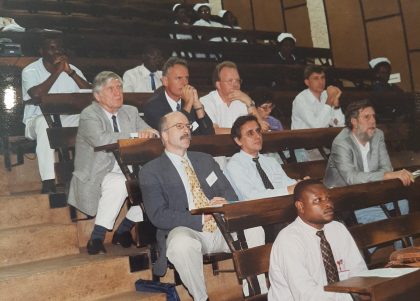
Unter diesem Vorzeichen stand auch seine Beratungs- und Lehrtätigkeit in Kirgistan (1999, 2002, 2003, 2004), Usbekistan (2009, 2012, 2013), Tadschikistan (2011) im Auftrag der kfW-Entwicklungsbank, Frankfurt/Main; und sein Engagement als Projektleiter der EU-Projekte ‘Higher Education Network for Applied Human Nutrition between Eastern Africa and Europe (HENNA)’ in Äthiopien, Kenia und Uganda und ‘E-Learning Network on Food and Nutrition Security (eLEFANS)’ mit Partneruniversitäten in Ostafrika und Europa (2008-2017); und er beriet das EU/Erasmus Plus-Programm für Zentralasien (2019-zuletzt).
Leichsenring war Mitglied der Dt. Gesellschaft für Kinderheilkunde und Jugendmedizin, der European Society for Pediatric Research, der Arbeitsgemeinschaft Pädiatrische Stoffwechselkrankheiten, der Dt. Gesellschaft für Tropenmedizin und Internationale Gesundheit sowie der Arbeitsgemeinschaft Tropenpädiatrie/Gesellschaft für Tropenpädiatrie und globale Kindergesundheit. Er publizierte über 30 Veröffentlichungen allein zu globaler Kinderheilkunde und Ernährung.
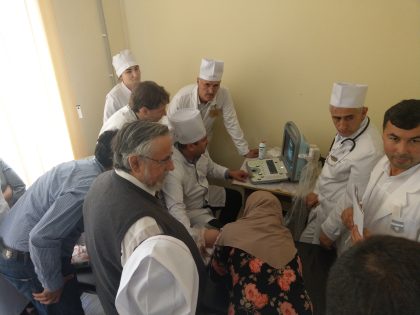
Für seinen Jahrzehnte langen Einsatz für internationale Kindergesundheit, insbesondere im Bereich Unterernährung und Infektionskrankheiten (Tuberkulose, Onchozerkose, Malaria) in Afrika und bis zuletzt in den letzten 15 Jahren für die strukturelle Verbesserung der Kindergesundheit in Zentralasien (wofür er eine Ehrenprofessur in Uzbekistan erhielt), wird er für viele Menschen unvergessen bleiben. Er war für viele Pädiater und KollegenInnen in Deutschland ein Visionär, Mentor, Wegbegleiter, Freund und Vorbild. Jemand sagte einmal über ihn: „A leader, who puts into practice, what others keep talking about.“ Zu unserem großen Bedauern hat die Welt diesen brillanten Menschen viel zu früh verloren.
Peter Meißner, Konstanz
Matthias Nelle, Böblingen/Bern
Michael Krawinkel, Gießen
Paediatrician for clinical supervision of training programme in Sierra Leone
 German Doctors e. V. is looking for experienced paediatricians to supervise and train students during their first clinical rotation in hospitals in the north of Sierra Leone.
Duration: 6 weeks
Application: Submit now for starting date summer 2022
Project background:
Sierra Leone, a country of around 7 million people, has a high infant mortality rate and a relatively low number of doctors. Medical care in the West African country is mainly provided by community health officers and nurses, especially outside the capital Freetown.
Together with the Ministry of Health, a training programme was launched in Sierra Leone in autumn 2021 to train graduates of the School of Clinical Sciences in Makeni in a 2-year programme in various specialities. A total of 3 NGOs, all of which have already been working in Sierra Leone for years, accompany training programmes with recognised bachelor's degrees in surgery, internal medicine or paediatrics.
German Doctors e.V. has been active in the training of health care workers in Sierra Leone for over 10 years and is co-responsible for the 2-year paediatric training course.
Mission description:
Experienced paediatricians are needed to supervise and train students during their first clinical rotation in hospitals in northern Sierra Leone for 6-week assignments.
The hospitals are located in remote regions of the country and provide medical care that is typical for the country. The work in the hospitals is done in close cooperation with local doctors, often tropical doctors from Europe. The professional basis of the training is the national guidelines as well as the ETAT+ guidelines and recommendations of MSF and the WHO. Two programme coordinators (medical and administrative) responsible for the paediatric programme work on site and are direct contacts for medical and organisational questions.
Responsibilities:
- Supervision of students during their patient care according to their competences
- Participation in hospital services together with the students
- Regular evaluation and training of students, but also of nurses and community health workers in the clinical area.
Prerequisites:
- Paediatrician with completed specialist training and experience in clinical work in low resource settings
- Willingness to work in a country with clearly limited resources and in a remote location
- Experience with teaching
- The mission doctors can expect a stimulating environment and an interesting task.
Payment / accommodation::
For this volunteer placement, part of the flight costs will be reimbursed; board and lodging on site are free. More informationen to be found here.
Sierra Leone is a politically stable country, which makes excursions in the vicinity of the hospitals or on the Western Peninsula possible.
Contact:
German Doctors e.V. mission planning
Mrs. Carola Walter (carola.walter(a)german-doctors.de)