


Projects
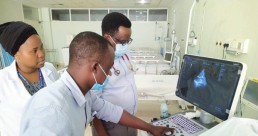
Klinikpartnerschaft GTP – Department of Paediatrics & Child Health an der Universität von Dodoma, Tansania (2021-2024)
Über das Projekt
Im Rahmen der Initiative “Klinikpartnerschaften – Partner stärken Gesundheit”, finanziert durch die Else Kröner-Fresenius Stiftung (EKFS) und das Bundesministerium für wirtschaftliche Zusammenarbeit und Entwicklung (BMZ), technisch begleitet durch die Gesellschaft für internationale Zusammenarbeit (GIZ), engagiert sich die GTP in Fortführung des sehr erfolgreichen Facharztprogramms für angehende PädiaterInnen in Mwanza und Dodoma (2016 bis 2020) seit 2021 (Laufzeit bis 2024) in der pädiatrischen Facharztausbildung in Dodoma, Tansania. Aufgrund des weiterhin bestehenden Mangels an Pädiaterinnen und Pädiatern mit Subspezialitäten reisen Experten aus Deutschland und anderen europäischen Ländern mehrfach pro Jahr nach Tansania, um in Dodoma theoretischen Unterricht anzubieten. Darüber hinaus findet praktischer Unterricht bei Visiten und Klinikeinsätzen statt, Ultraschallkenntnisse werden ebenso vermittelt. Das Pflegepersonal wird durch erfahrene Kinderkrankenschwestern/-pfleger geschult. Fehlende Ausstattung wird in begrenztem Maße durch das Projekt beschafft. Die Entwicklung von Behandlungsrichtlinien ist Bestandteil des Projekts.
Möglichkeit zur Mitarbeit – Dozenten gesucht
- Fachärztinnen/-ärzte für Kinder- und Jugendmedizin inklusive aller Subspezialitäten
- Neonatologisch und pädiatrisch erfahrenes Pflegepersonal
Wir freuen uns auf Bewerbungen von GTP-Mitgliedern oder solchen, die es werden wollen, mit Interesse an einem Unterrichtseinsatz in Dodoma. Arbeitserfahrung im Ausland und in der Lehre sind von Vorteil, aber keine unabdingbare Voraussetzung.
- Einsatzdauer: 2-3 Wochen (Einsatzzeitpunkt flexibel)
- Voraussetzungen: Gute Englischkenntnisse
- Vergütung: Übernahme der Aufenthalts- und Reisekosten
Kontakt und Bewerbung
Bei Interesse schreiben Sie bitte mit einem kurzen Lebenslauf an:
PD Dr. Carsten Krüger (krueger(a)globalchildhealth.de) – Programmverantwortlicher in Deutschland
Dr. Shakilu Jumanne (shakiluj(a)gmail.com) – Projektleiter vor Ort

Friede-Springer endowed professorship for Global Child Health
The Friede Springer Endowed Professorship
is the first
German professorship for Global Child Health
and has been located at
Witten/Herdecke University (UW/H)
since October 2017
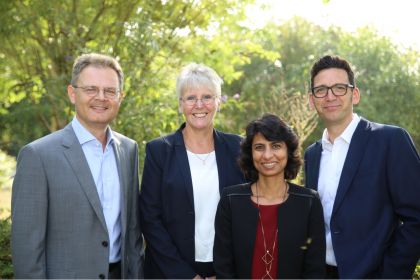
Together with its partners at home and abroad, the team of the endowed professorship develops research projects and is involved in education, training and continuing professional education in global child health in a variety of ways:
- Global health track and intercultural preparation for stays abroad as part of the "Modellstudiengang Medizin" of the Witten/Herdecke University.
- Further education for students of all health professions (summer school)
- Advanced modules in the Master's programme in International Health as a partner of the Network for Education in International Health (tropEd)
- Further training for specialist candidates in paediatrics and adolescent medicine in cooperation with the Else Kröner- Fresenius- Foundation, the Westphalia-Lippe Medical Association and the Kamuzu University of Health Sciences in Blantyre/Malawi as part of the "Else Kröner Malawi Child Health Centre" (special project child health).
Detailed information on the projects and offers of the professorship can be found here

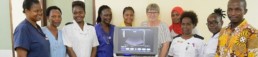
Hospital partnership GTP - Newborn unit at the Muhimbili National Hospital (MNH) in Dar Es Salaam (Phase I: 2018-2020; Phase II: 2020-2023)
About the project
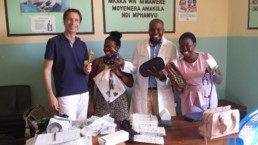
As part of the initiative "Clinic Partnerships - Partners Strengthen Health", financed by the Else Kröner-Fresenius Foundation (EKFS) and the German Federal Ministry for Economic Cooperation and Development (BMZ), with technical support from the Gesellschaft für internationale Zusammenarbeit (GIZ), the GTP has been involved in neonatal care at the Muhimbili National Hospital (MNH) in Dar es Salaam, Tanzania, since the end of 2018. Requested by local partners is the introduction of ultrasound and echocardiography, as well as training for doctors and nurses in various invasive and non-invasive forms of ventilation.
The neonatal unit at MNH has more than 100 beds and admits between 6,500 and 7,000 newborns per year. Affiliated to MNH is the largest medical school in the country: MUHAS (Muhimbili University for Health and Allied Sciences).
The first phase of the project lasted from 2018 to 2020 and was very successful. Therefore, a follow-up application was also approved under the same funding line. This second phase will last from 2020 to 2023 (extended by one year due to the pandemic).
Vacancies - we are looking for lecturers
- Neonatologists
- Nurses with experience in neonatology
We are looking forward to receiving applications from GTP-members or colleagues who would like to become members and who are neonatologists or nurses with experience in neonatology and who are interested in lecturing colleagues at the MNH in Tanzania.
Experience in working abroad and teaching are of advantage but not crucial.
- Duration of stay: 2-3 weeks (dates flexible)
- Requirements: Good English skills
- Pay: All expenses connected to the deployment will be covered
Contact and application
If you are interested please send a short CV to:
Dr. Carsten Krüger (email) - Programme coordinator in Germany
Dr. Antke Züchner (email) - Programme coordinator in Tanzania
Foto Credits: (c) Muhimbili National Hospital Webblog
Clinical Partnership GPT-Malawi (2017-2019)
About the project
In a cooperation project with GIZ, funded by the Else Kröner-Fresenius Foundation (EKFS) and the German Federal Ministry for Economic Cooperation and Development (BMZ), the GTP, supported by the Forum for International Health (www.foring.org), was very successfully involved in the further specialist training of paediatricians in Malawi from 2017 to 2019. The postgraduate programme at the College of Medicine in Malawi's capital Lilongwe is supported by several international partners and also includes the training of so-called "clinical officers" for further education in paediatrics. The project consisted of the following components for the GTP:
- Up to 6 teaching visits of German paediatricians per year in Malawi
- Implementation of community-based teaching on site
- Supervision of research projects leading to publications
- Sending volunteer doctors, nurses and midwives to teach on site
Collaboration opportunities
For components 1, 2 and 4, GTP together with BMZ sought paediatric colleagues with teaching experience or work experience in resource-poor countries who were willing to teach in Malawi for a limited period of time (from 2 weeks duration) and thus support our programme as trainers or lecturers.
Further information on the project can be obtained either from the former programme manager in Germany Dr Carsten Krüger (email) or from the then project manager on site Dr Andreas Schultz (email).
Prerequisites for participation in module 1 and 2 were:
- Specialist in paediatrics, preferably with additional qualification
- Demonstrable experience of teaching in postgraduate programmes
- Work experience or teaching experience in sub-Saharan Africa/low-resource setting
Prerequisites for participation in module 4 were:
- Completed professional training in the aforementioned disciplines
- Experience in teaching Bachelor's and Master's programmes
- Intercultural competence and team spirit
All expenses related to the preparation and implementation of the teaching components in Germany and Malawi were covered, but a salary could not be paid. We thank the colleagues who helped us to accompany young, enthusiastic Malawian specialists in their training as well as to expand our further training programme in paediatrics for "Clinical Officers".
Subspecialties in demand
- Emergency medicine
- Intensive care
- Quality management
- Neonatology
- Cardiology
- Infectious diseases
- Gastroenterology
- Allergology
- Pulmonology
- Endokrinology
- Nephrology
- Paediatric neurology
- Onkology and palliative care
Contact
Dr. Carsten Krüger (email) - Programme coordinator in Germany
Dr. Andreas Schultz (email) - Project coordinator on site
Paediatric specialty training in Tanzania (2016-2020)
Sustainable reduction of child mortality by qualified health personel
This project received the Else Kröner-Fresenius Prize for Medical Development Cooperation 2016, worth 100,000 euros, and was scheduled to run until 2020. The Else Kröner-Fresenius Foundation (EKFS) awarded the project for its exemplary concept, its sustainability and its importance for the health care of children and young people in Tanzania.
First steps
In 2006, Dr Christian Schmidt, current GTP Chair, initiated a three-year paediatric specialist training programme at Bugando Medical Center/Catholic University of Health and Allied Sciences in Mwanza (Tanzania). Together with other GTP members (Dr Werner Schimana, PD Dr Carsten Krüger), he developed a practice-oriented curriculum, which was approved by the university and state authorities in the same year. At that time, there were only 56 paediatricians for over 17 million children in the whole country. Until then, the fee-based academic specialist training (Master of Medicine) was only possible at two universities (Moshi, Dar es Salaam).
From 2006 to 2016, more than 25 paediatricians could be trained in Mwanza, all of them working in the country, 11 of them at Bugando Medical Centre itself.
In 2008, Dr Schmidt handed over responsibility for implementation to GTP member Dr Antke Züchner, who fulfilled this task until 2016. Then the management of the programme passed into Tanzanian hands. Every year, due to the glaring shortage of doctors, GTP lecturers from Germany came to Mwanza to teach paediatric subspecialties.
Further developments
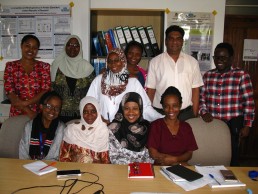
The project involved extending specialist training to the University of Dodoma. The paediatric department there is headed by a Tanzanian paediatrician who was himself trained in Mwanza. The specialist programme in Dodoma was designed along the lines of Mwanza, is accredited by the state and has also been supported by German lecturers from the GTP since 2017. Increasingly, however, lecturers from other universities in Tanzania are to be included in the sense of a South-South exchange.
GTP used the prize money to support four project components:
- Co-financing stipends over 3 years to participants of the Master of Medicine programmes in Mwanza and Dodoma
- Financing visits for on-the-job training of participants in African neighbouring countries and Germany
- Technical and structural support of the specialty programmes (medical devices, textbooks etc.)
- Co-financing visits of guest lecturers from Germany, Tanzania and African neighbouring countries.
We would like to thank the EKFS for the award and, by supporting this specialist programme, we remain committed to creating sustainable structures to improve child and adolescent health in Tanzania.